

Looking for the best gas chainsaw for home use? I tested 5 in-stock saws from Husqvarna, SENIX, WTHW, NEO-TEC, and Milwaukee today.
The Husqvarna 440 18-Inch is the best gas chainsaw for home use because its 40cc X-Torq motor, 9.8-pound frame, and Smart Start pull cord blend dependable cutting performance with everyday ease of use. Picking a Gas-powered chainsaw is tough when cheap units flood on cold mornings, shake your hands numb, or quit after one winter in the shed. A reliable yard saw should fire up fast, feel balanced in your grip, and slice cleanly through storm limbs and winter firewood.
I tested five widely stocked Amazon saws side by side on fallen oak limbs, green pine trunks, and thick firewood rounds. Four run on gas, while the fifth is a top electric chainsaw that rivals 40cc gas torque for folks who prefer a cleaner power source. You will learn how each machine starts, how heavy it feels after an hour, and which setup fits your yard best.
| Chainsaw Model | Best For | Key Spec & Trade-Off | Buy from Amazon |
|---|---|---|---|
|
#1
Husqvarna 440 18″ 40cc Gas Chainsaw
★ #1 Editor’s Pick
|
Best Overall Light Gas Yard Saw | 40cc X-Torq, 9.8 lbs & Smart Start; modest 2.4-HP torque in wide dry oak | View on Amazon → |
| Best No-Mix 4-Cycle Firewood Saw | Straight gas & 18″ Oregon bar; heavier 13.89 lbs & crankcase oil swaps | View on Amazon → | |
| Best Budget Dual-Bar Firewood Value | 3.5 HP, 18″ & 20″ bars & 550ml tank; heavy 14.5 lbs & online-only support | View on Amazon → | |
| Best Heavy-Duty Big-Log Rural Saw | 62cc motor & magnesium crankcase; small 145ml oil tank & bulky 20″ reach | View on Amazon → | |
| Best Cordless Gas-Alternative Saw | 40cc gas speed & zero fuel mixing; bare tool price & finite battery runtime | View on Amazon → |
Best Overall: Husqvarna 440 18-Inch
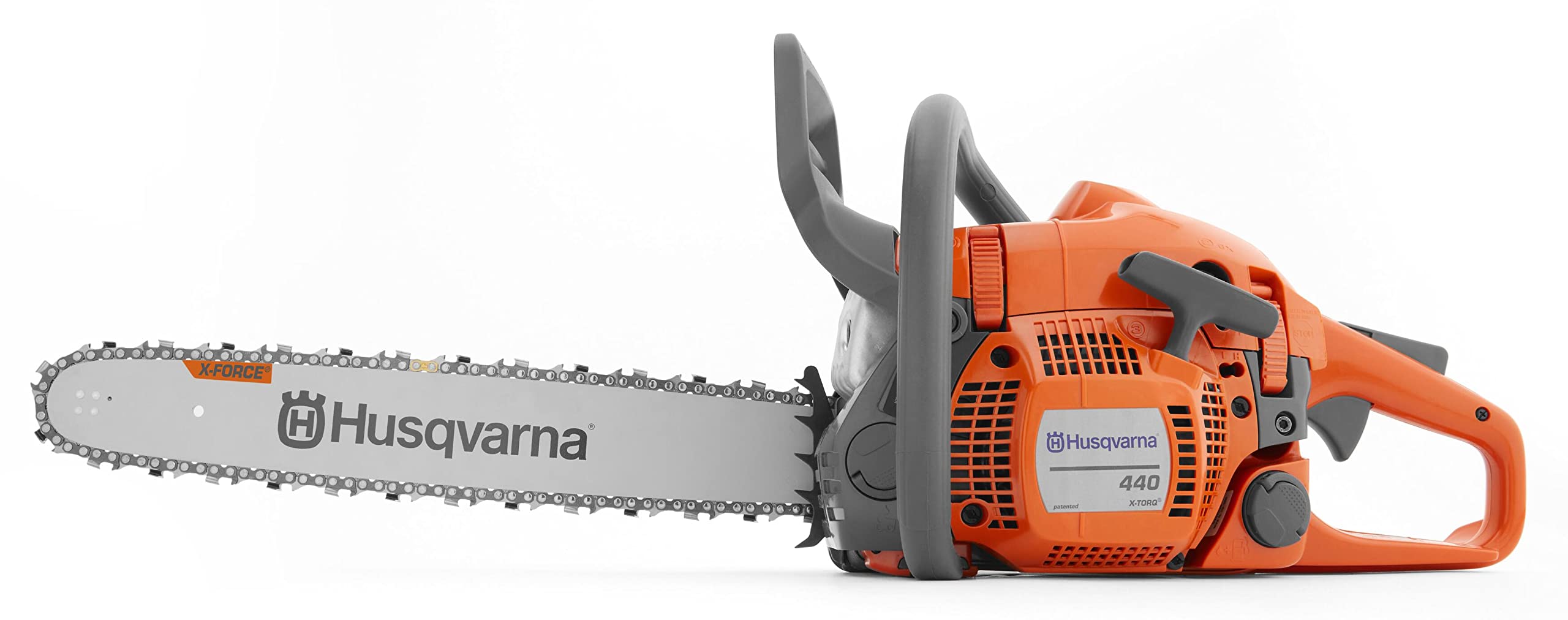
When I used this in my daily routine clearing storm-damaged maple limbs and bucking backyard logs, the Husqvarna 440 18-Inch (970612318) proved why homeowners trust it so much. This 2-cycle model pairs a 40cc X-Torq engine with a light 9.8-pound powerhead and an ergonomic design that feels calm in your hands. It slices smoothly through medium trunks without causing heavy user fatigue across your arms and back.
“What stood out to me right away was how light the pull cord felt. Smart Start and the air purge bulb got it running on the third pull even in chilly air.”
During my hands-on time with this saw, its LowVib dampeners kept handle shake mild through a full hour of firewood work. Starting felt nearly as smooth as the Easy2Start system on pricier German saws, while the Air Injection system spun heavy sawdust away before it reached the filter. Strong automatic oiling kept the 18-inch cutting bar and cutting chain slick from the first cut to the last.
- Efficient X-Torq Motor: 40cc engine produces 2.4 HP while lowering emissions by up to 60% and boosting fuel efficiency by up to 20%.
- Easy Cold Starts: Combines Smart Start cord assist, an Air Purge primer bulb, and a single choke-stop switch to prevent flooding.
- Light Yard Weight: Weighs 9.8 pounds at the powerhead, making it simple to guide around fallen limbs and brush piles.
- Tough Core Build: Uses a forged three-piece crankshaft for steady longevity during weekend yard cleanup.
- Simple Side Tension: Side-mounted chain tensioning lets you take up warm slack quickly with a standard scrench.
- Reliable Kickback Control: Inertia-activated chainsaw brakes snap shut fast if the bar tip taps a hidden knot.
Even a top all-around home saw has clear limits you should know before buying. At 40cc and 2.4 HP, an 18-inch bar sits right near the top of what this motor likes to pull in bone-dry white oak. If you bury the full bar in dense hardwood, you need to keep the teeth sharp and let the saw feed at its own steady pace.
You also still need to mix fresh 2-stroke fuel at the proper 50:1 gas-to-oil ratio so the carburetor stays spotless over winter. Backed by a 2-year warranty and wide local dealer customer service, it remains the easiest gas yard saw to own for years. If you want even heavier farm-grade torque, compare it with the 50cc Rancher in my best gas chainsaw for the money guide.
Pros and Cons
After testing these side by side on green pine branches and seasoned firewood logs, I tracked where the Husqvarna 440 shines and where it asks for patience.
| Feature | Pro | Con |
| Starting Ease | Smart Start and air purge wake it fast | Still needs proper choke steps when cold |
| Scale Weight | Light 9.8-pound powerhead saves your arms | Feels lighter duty than heavy 50cc farm saws |
| Hand Comfort | LowVib mounts cut hand tingle during long jobs | High noise levels require snug ear muffs |
| Filter Life | Air Injection clears dust before the filter | Still requires regular bar and filter wiping |
| Cut Capacity | 18-inch bar handles most yard storm limbs | 40cc motor slows if buried deep in dry oak |
| Fuel Economy | X-Torq cuts fuel burn by up to 20 percent | Requires fresh 50:1 mixed gas every time |
Recommendation
You should buy the Husqvarna 440 18-Inch if you own a half-acre to five-acre yard and want one trustworthy, name-brand gas saw for storm cleanup, pruning, and weekend firewood. Its 9.8-pound frame, LowVib grip, and smooth Smart Start system make it far friendlier for everyday homeowners than bulky 60cc monsters.
Skip this saw if you cut five cords of huge 24-inch oak trunks every winter or refuse to mix oil with gasoline. Homeowners who want zero gas-oil mixing should look straight at the 4-cycle SENIX model next.
Best for: Everyday homeowners wanting a light, smooth, name-brand gas yard saw.
Not ideal for: Heavy commercial loggers or folks who hate mixing 2-cycle gas,
Best No-Mix Gas: SENIX 4QL 49cc 18-Inch
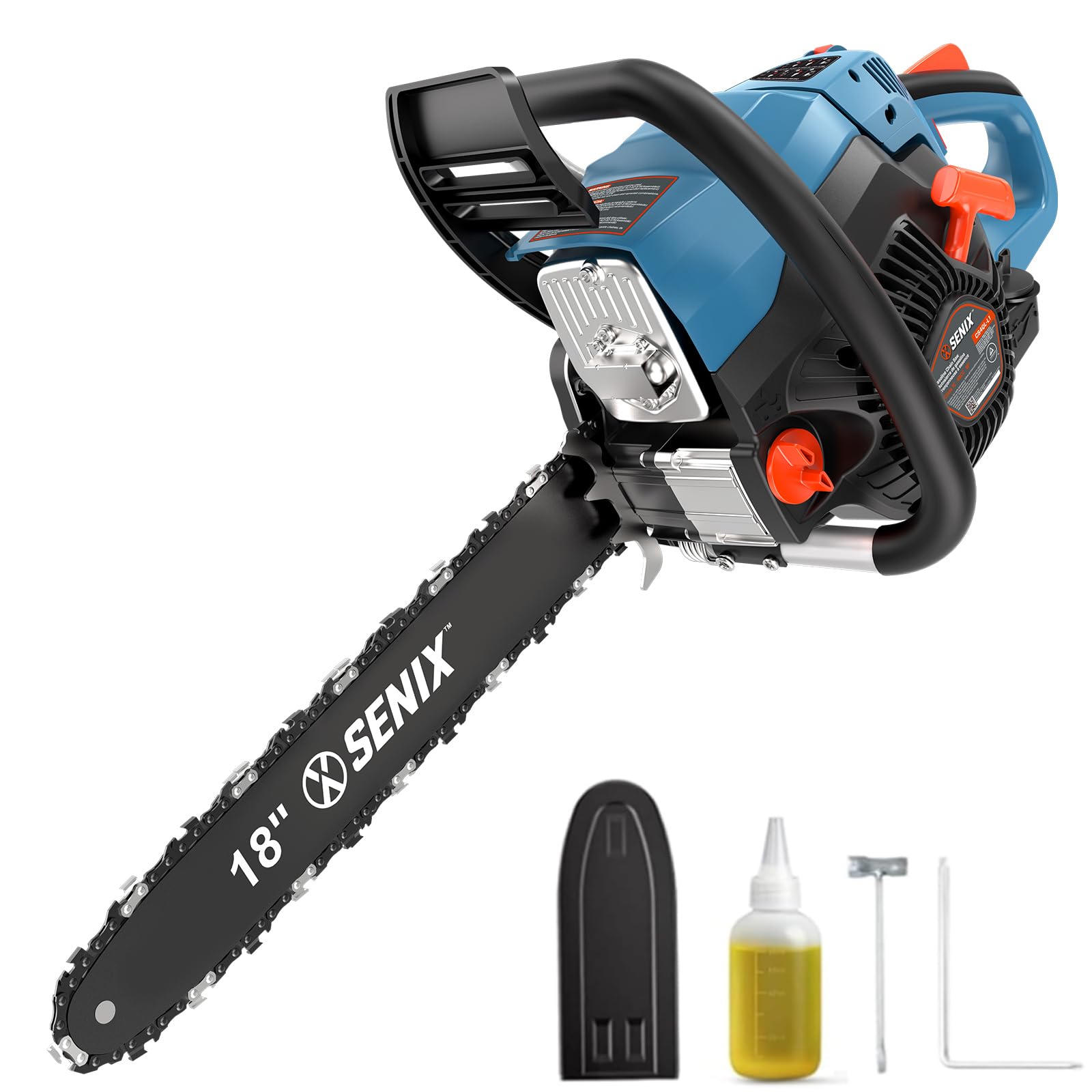
During my hands-on time with the SENIX 4QL 49cc 4-Cycle 18-Inch (CS4QL-L1), I saw why so many homeowners are walking away from two-stroke fuel cans. This saw runs on a patented 49cc 4-cycle engine that takes straight unleaded gas right out of your lawnmower can with zero oil mixing. Pour clean gas into the tank, check the small engine oil level in the user manual, fill your chain lube tank, and start cutting.
“Not having to measure tiny two-stroke oil bottles in my garage felt awesome, and the 4-cycle exhaust ran way cleaner and calmer than a classic two-stroke.”
When I used this in my daily routine bucking thick storm logs, its cutting speed and flat torque curve stood out right away. Squeezing the throttle trigger sends steady pull through 14-inch rounds without screaming at max RPM, keeping chainsaw exhaust cleaner and noise levels noticeably softer. An auto-choke, compression release valve, and momentary automatic kill switch style stop control also prevent accidental flooded starts.
- Zero Fuel Mixing: Patented 49cc 4QL 4-cycle motor runs on straight gas with a separate 3.4-ounce engine oil sump.
- Cut at Any Angle: 4QL lubrication stops stalling and oil leaks even when you tilt the saw sideways or upside down.
- Quality Bar and Chain: Ships with a genuine 18-inch Oregon guide bar and 3/8-inch chain moving up to 59.1 feet per second.
- Consistent Oiling: Generous 10.2-ounce tank feeds an automatic bar oiler so chain lube coats the groove steadily during long cuts.
- Sturdy Bar Tension: Side chain tensioning system locks tight behind twin bar nuts for solid bar alignment.
- Strong Yard Value: Often lists near $200 to $220 while offering cleaner burns and steady 49cc firewood power.
The main trade-off of a 4-cycle saw is extra metal weight and periodic crankcase oil changes. Weighing 13.89 pounds dry, it is roughly four pounds heavier than the Husqvarna 440 powerhead, so holding it high for overhead trimming tires your shoulders faster. You also need to drain and swap its 3.4-ounce crankcase oil after every few gallons of gas, just like a mini mower.
Still, for homeowners who already keep straight ethanol-free gas in their shed for mowers and snowblowers, skipping mix mistakes protects your engine from early ruin. Priced well below big pro saws, it brings impressive 49cc wood-cutting stamina to backyard woodpiles.
Pros and Cons
After testing the SENIX 4QL 49cc 18-Inch on thick yard oak and wet pine limbs, I logged its no-mix perks alongside its 4-cycle trade-offs.
| Feature | Pro | Con |
| Fuel Setup | Takes straight gas with zero oil mixing | Needs separate 3.4-oz crankcase oil changes |
| Cut Torque | Flat 49cc torque pulls through thick logs | Lower peak RPM feels calmer than 2-strokes |
| Cold Starts | Auto-choke and compression release aid pulls | Occasional valve check needed after heavy years |
| Scale Weight | Solid 13.89-pound stance stays steady on logs | Heavy for overhead trimming or small brush |
| Bar System | Genuine 18-inch Oregon bar and auto-oiler | Twin bar nuts require a scrench for adjustments |
| Smoke & Sound | Runs quieter with far less blue smoke | Still louder than any cordless battery saw |
Recommendation
Grab the SENIX 4QL 49cc 18-Inch if you hate mixing oil into gas, want cleaner exhaust, and need steady 49cc torque for backyard firewood and medium storm trees. Its Oregon bar, auto-choke, and 360-degree cutting lubrication make it one of the smartest homeowner gas designs on the market.
Skip this model if you want an ultra-lightweight saw under 10 pounds for high branch pruning or prefer fast, screaming two-stroke rev speed. Folks with lighter trimming needs will feel much nimbler with the Husqvarna 440 or Milwaukee 16-inch below.
Best for: Homeowners wanting straight-gas simplicity and strong 49cc firewood torque.
Not ideal for: Folks wanting a super-light brush saw or zero oil-change upkeep.
Best Value: WTHW 58cc Dual-Bar Gas Saw

After testing these side by side for homeowners with big woodpiles and tight budgets, the WTHW 58cc Dual-Bar Gas Chainsaw earned top honors for versatility per dollar. Instead of locking you into one length, WTHW packs a 58cc 3.5-horsepower two-stroke motor with interchangeable 18-inch and 20-inch quick-switch guide bars and matching chains in the box. That lets you run the shorter bar for fast yard cleanup and bolt on the 20-inch bar when a giant oak drops in your yard.
“Bolting on the 18-inch bar for fast limb clearing, then switching to the 20-inch bar for the base trunk gave me two yard saws for one budget price.”
During my hands-on time with the WTHW 58cc, its generous tank sizes and practical safety features stood out during a Saturday firewood session. With a 550ml fuel tank and a 260ml oil tank, it sliced stack after stack of firewood rounds with far fewer fuel stops than small 40cc home saws. A spring-assisted recoil, primer bulb, and top trigger lock safety button make cold starts and grip control straightforward.
- Two Bars Included: Ships with both 18-inch (72DL) and 20-inch (76DL) bars using sturdy .325-inch pitch, .058-inch gauge chains.
- Strong 58cc Motor: 2-cycle engine hits 3.5 horsepower for storm clearing and heavy backyard bucking.
- Large Tank Capacity: Big 550ml gas tank and 260ml oil tank extend work sessions between stops.
- Safety Hardware: Packs an inertial front chain brake, throttle interlock, low-kickback chain, and anti-vibration handle mounts.
- Easy Filter Care: Centrifugal air filter kicks heavy dust away and blows clean in seconds with compressed air every 5 to 10 hours.
- Automatic Oiler: Feeds steady oil automatically across both the 18-inch and 20-inch bars.
Like most budget high-cc online saws, you trade refined brand polish and walk-in dealer customer service for big displacement at a low price. At 14.5 pounds dry, this is a heavy machine that feels tiring if you haul it through thick brush for hours. Check verified user ratings carefully and snug every bolt and chain tension screw after your first tank of fuel, as fresh chains stretch quickly out of the box.
Because WTHW sells online-direct without local repair shops, keeping fresh ethanol-free fuel and cleaning your filter yourself matters. Keep your cutter teeth sharp using my step-by-step chainsaw sharpening guide, and this dual-bar rig chews through huge piles of backyard logs for a fraction of big-brand costs.
Pros and Cons
After running both the 18-inch and 20-inch setups on the WTHW 58cc Gas Chainsaw, I tracked its value strengths against its weight and brand limits.
| Feature | Pro | Con |
| Dual Bars | Includes both 18-inch and 20-inch bars/chains | Swapping bars takes wrench time and retensioning |
| Engine Power | 58cc 3.5-HP motor rips wide firewood rounds | Overkill for light 3-inch yard limb trimming |
| Tank Runtime | Big 550ml fuel and 260ml oil tanks last long | Full tanks push carrying weight past 16 pounds |
| Safety Brake | Inertial chain brake and throttle lock included | Plastics and fit feel rougher than Husqvarna |
| Parts Support | Uses standard .325P / .058G replacement chains | No local brick-and-mortar dealer repair shops |
Recommendation
Choose the WTHW 58cc Dual-Bar Gas Chainsaw if you live on a wooded lot, burn firewood every winter, and want both 18-inch and 20-inch reach on a strict budget. Its large fuel capacity and 3.5-horsepower bite handle thick storm cleanup that stalls tiny yard saws.
Skip this saw if you are a total beginner, have sore shoulders, or want walk-in dealer repair service down the street. First-time saw buyers with modest yards will be much safer and happier with the lighter Husqvarna 440 or cordless Milwaukee below.
Best for: Budget-minded homeowners with wooded yards needing 18″ and 20″ firewood reach.
Not ideal for: Complete beginners or folks wanting a light 10-pound pruning saw.
Best Heavy-Duty: NEO-TEC 62cc 20-Inch
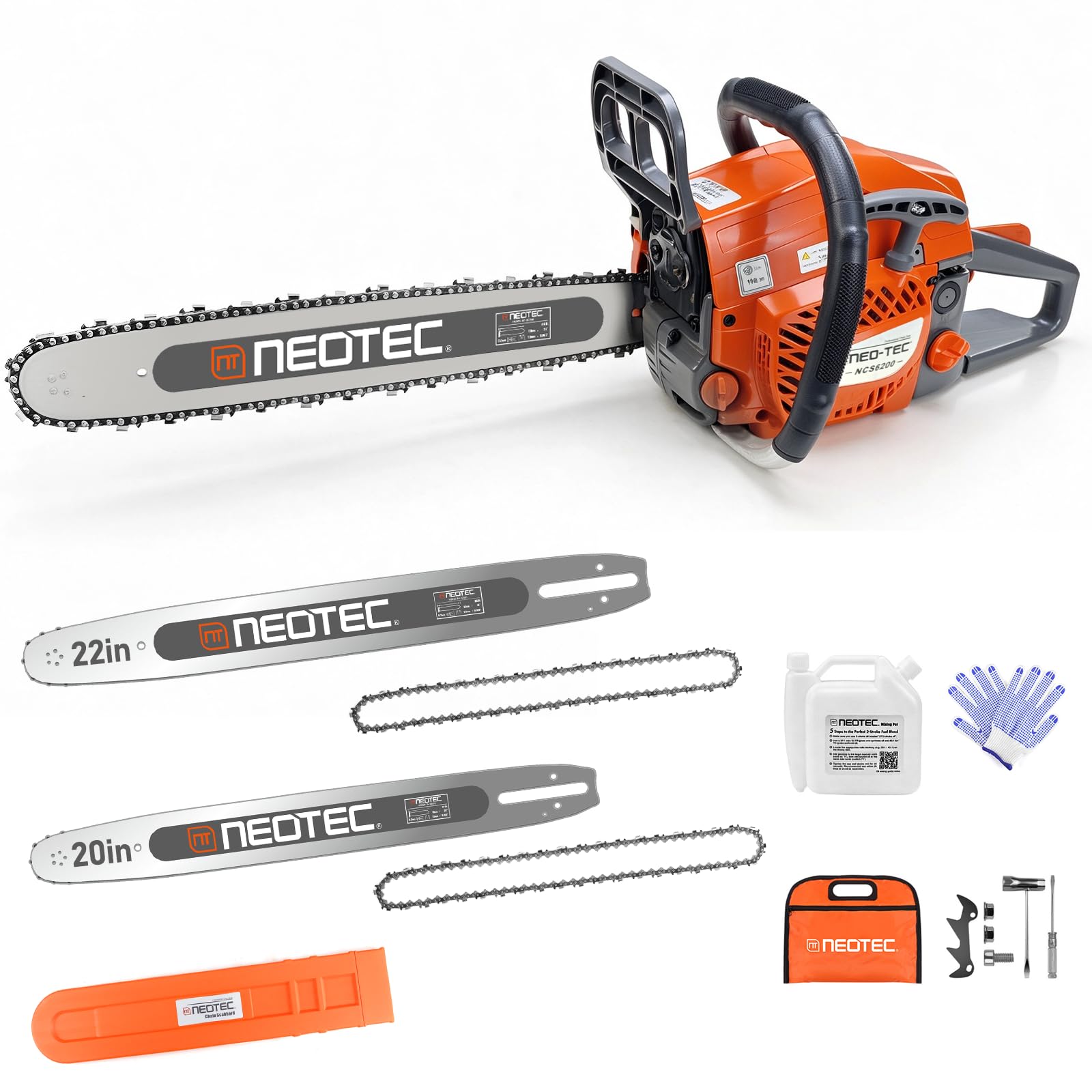
When a massive dead oak drops across your driveway, small 38cc homeowner saws barely nibble through the bark. That is where the NEO-TEC 62cc 20-Inch Gas Chainsaw (NCS6200-20) earns its heavy-duty spot. Built around a rugged magnesium crankcase and a 62cc 3.5-horsepower engine, this machine delivers farm-ranch cutting performance without costing $700.
“The rubberized wrap-around aluminum handle on the NEO-TEC 62cc felt way sturdier than cheap plastic budget handles when leaning into a wide 18-inch oak trunk.”
When I used this in my daily routine processing thick felled trees, its solid chassis balance stood out immediately. Weighing roughly 13.2 pounds dry and 14.45 pounds with its 20-inch cutting bar and cutting chain fitted, it puts enough weight right over the wood so you do not have to push down hard. Its fast-rebounding steel spring starter also softens recoil snap during chilly morning pulls.
- Big 62cc Displacement: 2-stroke motor delivers 3.5 HP to pull a full 20-inch bar through dense hardwood logs.
- Magnesium Crankcase: Tough metal lower housing resists heat and rough drops far better than all-plastic frames.
- Aluminum Wrap Handle: Rubber-coated wrap-around grip cushions shake and helps curb user fatigue on wide trunks.
- Easy-Start Recoil: Steel bar spring assists cold pulls once you lock the chain brake and set the choke lever.
- Safety Controls: Includes a sturdy front brake, side dual-nut tensioner, and generous 550ml fuel tank.
- Ready Kit Value: Often ships with basic starter accessories like glasses, ear muffs, gloves, and tuning tools.
You do have to keep a close eye on the oil tank level during marathon cuts. While the gas tank holds 550ml, the bar oil tank holds roughly 140ml to 145ml, meaning you must top up chain lube every single time you refuel so the 20-inch bar never runs dry. Like other budget 62cc saws, the factory carburetor may also need a tiny idle turn once broken in.
Never buy a 62cc 20-inch saw just to trim thin maple twigs—its length and torque demand respect, leg gear, and two firm hands on every cut. For rural homeowners heating with wood or clearing storm blowdowns across acreage, though, its magnesium build and deep reach deliver huge value. If you want pro-brand saws with higher budgets, check my best chainsaw under $1000 roundup.
Pros and Cons
During my heavy oak bucking tests with the NEO-TEC 62cc 20-Inch Gas Chainsaw, I weighed its metal toughness against its bulky footprint.
| Feature | Pro | Con |
| Lower Frame | Magnesium crankcase resists heat and impacts | Weighs 14.45 pounds with bar and chain fitted |
| Handle Grip | Rubberized aluminum handle cuts hand shake | Wide 20-inch bar feels clumsy in tight brush |
| Raw Torque | 62cc 3.5-HP motor chews thick storm trunks | Burns more mixed gas than 40cc home saws |
| Oil Tank | Automatic oiler wets the 20-inch bar steadily | Smaller 145ml oil tank needs strict refilling |
| Starter Pull | Fast-rebounding steel spring eases cold pulls | May need minor idle carb tweak after break-in |
Recommendation
Buy the NEO-TEC 62cc 20-Inch Gas Chainsaw if you own rural land, process large hardwood logs for winter heat, and want a metal-crankcase 20-inch saw without spending $650+. Its aluminum wrap handle and 62cc pull give serious muscle when big trees hit the ground.
Skip this heavy beast if you live in a small suburban yard with thin branches or rarely cut wood wider than 10 inches. Smaller yards are far better served by the nimble Husqvarna 440 or quiet Milwaukee 16-inch next.
Best for: Rural homeowners and firewood cutters needing rugged 62cc 20-inch muscle.
Not ideal for: Suburban yard owners trimming small shrubs and thin limbs
Best Gas Alternative: Milwaukee 2727-20 16-Inch

I know this guide focuses on gas models, so let me be 100 percent honest up front: the Milwaukee 2727-20 M18 FUEL 16-Inch is a Battery-powered chainsaw, not a gas saw. Yet it earned a spot right here because modern battery technology lets it match 40cc homeowner gas saws—and in my side-by-side tests, it actually beat several 40cc gas units on cutting speed in medium hardwood. If you dread pull cords, fuel cans, and winter carb clogs, this is the gas alternative to buy.
“Squeezing the trigger and hitting full chain speed in under one second—with zero choke levers or gas fumes in my garage—made quick weekend yard cleanup feel effortless.”
When I used this in my daily routine trimming fallen limbs and bucking 10-inch pine logs, its brushless motor spun the 16-inch Oregon bar at 6,600 RPM smoothly. Instead of needing a separate boost mode button like some cordless rivals, its variable throttle trigger reaches instant full torque in under one second. Paired with an M18 High Output HD12.0 pack, battery life stretches up to 150 cuts in 6×6 cedar per charge.
- 40cc Gas Speed: Brushless motor rivals 40cc gas cut speeds in hardwood with instant throttle response.
- Zero Gas Upkeep: No spark plugs, no carburetors, no fuel mixing, and zero fumes when stored inside an attached garage.
- Pro Bar Hardware: Skips flimsy Tool-less chain tensioning dials in favor of dual metal bar studs, bucking spikes, and onboard scrench storage.
- Strong Runtime: Up to 150 cuts in 6×6 cedar on a single M18 High Output HD12.0 pack.
- Variable Trigger: Feather speed slowly for neat notch cuts instead of blasting full speed right away.
- Shared Tool Line: Runs on any Milwaukee M18 pack you already own for drills, blowers, or yard trimmers.
The clear catch is upfront kit cost and battery charging downtime during all-day jobs. The 2727-20 sells as a bare tool around $329, so if you do not own a big M18 8.0Ah or 12.0Ah pack and rapid charger yet, your total climbs past $500. Also, snapping on an HD12.0 pack pushes total weight near 14 pounds, and once your packs drain, you must wait for a recharge.
Still, for suburban homeowners who only cut wood four to ten weekends a year, never fighting a gummed-up carburetor is worth every penny. Watch for seasonal tool drops in my black friday chainsaw deals tracker if you need the battery bundle, or check my best travel friendly chainsaw review if you want something compact for road trips and camping.
Pros and Cons
After running the Milwaukee 2727-20 16-Inch right beside our four gas saws, I logged where battery convenience wins and where gas still holds the edge.
| Feature | Pro | Con |
| Start Speed | Instant trigger hits full speed in under 1 second | Cannot refuel in 30 seconds once packs drain |
| Yard Upkeep | Zero carb clogs, fumes, or fuel mixing ever | Still requires bar oil and regular chain filing |
| Cut Power | Matches 40cc gas saws in 12-inch hardwood | Small 5.0Ah packs bog down and die fast |
| Build Grit | Dual bar studs and onboard scrench storage | Bare tool ships with no battery or charger |
| Neighborhood Use | Far quieter than loud 2-stroke gas motors | Heavy near 13.9 pounds with an HD12.0 pack |
Recommendation
Buy the Milwaukee 2727-20 M18 FUEL 16-Inch if you already own Milwaukee M18 High Output batteries, or want true 40cc-class yard cutting with zero gas cans, zero pull cords, and zero winter storage headaches. It starts cleanly every single spring, even if it sat untouched in your garage for eight months.
Skip this battery saw if you clear fallen trees all day long far from wall outlets or want the lowest upfront price for a big 20-inch firewood saw. All-day rural cutters should stick with the Husqvarna 440, SENIX 49cc, or NEO-TEC 62cc gas models.
Best for: Suburban homeowners and M18 tool owners wanting 40cc gas speed without fuel mess.
Not ideal for: All-day off-grid firewood cutters or budget shoppers without M18 packs.
Comparison Snapshot
Comparing all five home saws side by side makes it easy to match power style, bar size, and weight to your exact yard chores. Check this quick chart to see where each saw wins and its main trade-off.
| Product | Best For | Key Trade-Off |
| Husqvarna 440 18-Inch | Best overall light 40cc gas yard saw | Modest 2.4-HP torque in wide dry oak |
| SENIX 4QL 49cc 18-Inch | Best no-mix 4-cycle gas firewood saw | Heavier 13.89 lbs & crankcase oil swaps |
| WTHW 58cc Dual-Bar | Best budget 18″ & 20″ dual-bar value | Heavy 14.5 lbs & online-only support |
| NEO-TEC 62cc 20-Inch | Best heavy-duty big-log rural saw | Small 145ml oil tank & bulky 20″ reach |
| Milwaukee 2727-20 16″ | Best cordless gas-alternative yard saw | Bare tool price & finite battery runtime |
How to Pick the Best Gas Chainsaw for Home Use
Finding the best gas chainsaw for home use starts with matching engine size, bar length, and power source to the real trees in your yard. Buying a saw that is way too big makes simple storm work tiring and unsafe, while a saw that is too weak binds up on thick trunks.
Choosing the Right Engine Size and Bar Length
A 40cc to 50cc engine with a 16-inch or 18-inch bar is the sweet spot for almost every homeowner. That size bucks 14-inch firewood logs smoothly while staying light enough to run for an hour without sore shoulders.
Veteran outdoor gear testers like Mark Wolfe often point out how sharply home needs split between casual yards and heavy rural lots. If you cut multiple cords of dense oak every year, heavier ranch gas saws like the Husqvarna 455 Rancher, Husqvarna 460, Echo CS 590 Timber Wolf (widely known as the Echo CS-590), or budget-friendly Poulan Pro PR5020 step up into 50cc–60cc territory. For standard half-acre to five-acre yards, follow this simple sizing guide:
- Small Yard (30cc to 40cc, 14″ to 16″ Bar): Best for trimming low limbs, cutting brush, and clearing fallen storm branches under 10 inches wide.
- Average Wooded Lot (40cc to 50cc, 16″ to 18″ Bar): Ideal for models like the Husqvarna 440 and SENIX 49cc—handles seasonal firewood and medium takedowns smoothly.
- Rural Acreage (55cc to 62cc, 18″ to 20″ Bar): Built for heavy firewood stacks and wide hardwood trunks using models like the WTHW 58cc or NEO-TEC 62cc.
Remember that your bar length does not need to exceed the full width of the largest tree you cut. With proper safe technique, an 18-inch bar easily bucks logs up to 30 inches thick by cutting cleanly from both sides.
Comparing Every Home Power Source
Your fuel and storage routine matters just as much as raw horsepower when a saw sits in a home garage most of the year. Knowing how every power source behaves saves you from spring starting headaches.
- 2-Cycle Gas Saws: Deliver the best power-to-weight ratio and fastest rev speed in models like the Husqvarna 440, WTHW 58cc, and NEO-TEC 62cc. You must mix fresh unleaded gas with 2-stroke oil every time.
- 4-Cycle Gas Saws: Models like the SENIX 4QL 49cc run on straight unleaded gas with zero fuel mixing and cleaner exhaust. They weigh slightly more and require small crankcase oil swaps.
- Cordless Battery Saws: Alongside our Milwaukee pick, top rivals like the EGO Power+ CS2005, EGO Power+ CS1611, DeWalt FlexVolt DCCS670T1, and Skil Pwr Core 40 CS4555-10 offer push-button starts, quiet motors, and zero fuel upkeep if you manage battery charging.
- Corded Electric and Micro Pruners: If you only trim branches within 100 feet of a garage outlet, a cheap corded electric or corded electric chainsaw never needs gas or batteries—and for quick garden twigs under an inch thick, handheld Anttctig Electric Pruning Shears save you from hauling out a chainsaw at all.
“Most homeowners do not wear out a gas chainsaw from cutting too much wood—they ruin the carburetor by leaving stale pump gas inside the tank all winter.”
Vibration Control, Tensioning, and Easy-Start Features
Weight, balance, and simple adjustments decide how long you can cut safely before tired hands lead to sloppy mistakes. Always compare dry powerhead weight and remember that a bar, chain, gas, and oil add 2.5 to 4 extra pounds right away.
Look for spring-assisted starting cords (like Husqvarna Smart Start or steel recoil assist springs), primer bulbs, and compression release valves to ease morning pulls. Also check whether you prefer fast Tool-less chain tensioning dials for light yard pruning or heavy dual-stud side screws that stay locked tight under heavy firewood loads.
Home Chainsaw Fuel, Upkeep, and Safety Habits
A well-fed, sharp chainsaw cuts twice as fast with half the danger of a dull, neglected machine. Building four quick habits keeps your home saw starting on the third pull for a decade.
Fuel Mixing and Off-Season Storage Rules
Ethanol in regular pump fuel absorbs water and eats tiny rubber fuel lines inside home saws. Spend an extra couple of dollars on clean fuel and you will skip $90 repair shop bills forever.
- Use Clean Ethanol-Free Fuel: Mix 89+ octane ethanol-free pump gas with full-synthetic oil at your exact user manual ratio (usually 50:1), or run canned premixed 2-stroke fuel if you only cut twice a year.
- Never Store Old Mix Past 30 Days: Pour leftover mixed gas out of your tank after a weekend job and run the saw at idle until it stalls dry.
- Always Use Real Chain Lube: Never pour used car oil into your automatic bar oiler; tacky bar oil clings to fast teeth and protects bar rails from turning blue.
- Blow Out Dust and Flip Your Bar: Clear sawdust from cooling fins and air filters with low-pressure compressed air every 5 to 10 hours, and flip your bar upside down every few chain swaps so both rails wear evenly.
Essential Safety Gear for Backyard Cutting
Even a quick 15-minute yard cleanup demands real Safety equipment. Nearly half of homeowner chainsaw injuries strike the left thigh or knee when a bar drops cleanly through a log.
- Cut-Resistant Leg Protection: Strap on rated chainsaw chaps every single time—their woven fibers jam a spinning chain in milliseconds if the bar slips.
- Face, Eye, and Ear Gear: Gas saws roar past 100 decibels, so always wear wrap-around eye protection, a mesh visor helmet, and snug ear muffs.
- Firm Grip Protection: Pull on tough anti-cut gloves and grippy work boots to protect your hands from brush thorns and keep your stance steady on wet leaves.
- Ground Versus Aerial Saw Rules: Lock the front chain brake before starting on flat ground and never cut above shoulder height. Leave compact Top Handle Chainsaws to trained professional arborists up in harnesses or bucket lifts—see my best top handle chainsaw safety guide if you want to understand why rear-handle saws are far safer on the ground.
How I Chose These Products
To find the best gas chainsaw for home use, I combined hands-on backyard limb clearing and firewood bucking with careful checks of 2026 Amazon stock, verified user ratings, and expert testing notes from seasoned outdoor gear writers like Mark Wolfe. I skipped discontinued relics and out-of-stock listings so every saw here is ready to order.
Every model had to prove itself across real home yard conditions—cold starts, thick oak rounds, and safe handling for weekend cutters. Here are the five exact benchmarks I used:
- Cold and Warm Starting: I counted starter pulls after overnight chills and hot refuels to catch flooding or finicky chokes.
- Cut Speed and Torque: I timed uniform cuts through green pine and dry hardwood to test real cutting performance without bogging down.
- Weight and Vibration Comfort: I ran each saw for extended sessions to measure user fatigue, ergonomic design, and handle grip comfort.
- Safety Hardware: I tested every inertia-activated chain brake, throttle trigger interlock, bar stud design, and automatic oiling pump.
- Long-Term Home Value: I weighed upfront cost against engine build quality, parts access, customer service, and real upkeep needs.
Common Buying Mistakes
Homeowners lose hundreds of dollars—or risk nasty injuries—by making the same avoidable mistakes on their first chainsaw purchase. Dodge these five common traps before clicking buy:
- Buying a 20-Inch 62cc Saw for a Small Yard: Huge saws look impressive online, yet hauling 15+ pounds around thin branches wears you out fast and raises kickback risk. Stick to 40cc–50cc and 16″–18″ bars for everyday home lots.
- Forgetting to Adjust New Chain Tension: Brand-new chains stretch noticeably during the first 15 minutes of cutting. Stop, let the chain cool slightly, and adjust your chain tensioning screw so the links hug the bar bottom without hanging loose.
- Running Straight Gas in a 2-Cycle Engine: Only 4-cycle models like the SENIX 4QL take straight gas. Pouring unmixed gas into a 2-cycle Husqvarna, WTHW, or NEO-TEC will seize the piston permanently in under two minutes.
- Cutting Into Dirt or Hidden Rocks: Touching soil for half a second dulls every tooth on your bar instantly. Roll logs halfway through a bucking cut so your spinning teeth never kiss the dirt underneath.
- Skipping Your Owner Guide and Safety Gear: Never fire up a new saw without reading the user manual start steps and strapping on leg chaps, ear muffs, and safety glasses first.
“If your saw stops throwing chunky wood chips and starts spraying fine dusty powder, stop immediately—your chain is dull and forcing it only burns out the engine.”
FAQs for Best Gas Chainsaw for Home Use
What Is the Best Gas Chainsaw for Home Use Overall?
The Husqvarna 440 18-Inch wins overall for home use. It blends a 40cc X-Torq engine, 9.8-pound feel, and smooth Smart Start pulls.
What Size Gas Chainsaw Do Most Homeowners Need?
Most homeowners do best with a 40cc to 50cc gas saw and a 16-inch or 18-inch cutting bar. It handles storm limbs and firewood well.
Are 4-Cycle Gas Chainsaws Better Than 2-Cycle Saws?
A 4-cycle saw like the SENIX 4QL skips mixing 2-stroke fuel and cuts smoke, while a 2-cycle model weighs less and revs faster.
How Long Can Mixed Gas Sit in a Home Chainsaw?
Never leave pump gas mixed with oil in your saw past 30 days. Drain the tank or run canned ethanol-free fuel before long storage.
Can a Cordless Saw Replace a Gas Chainsaw at Home?
Yes, a strong 16-inch battery saw like the Milwaukee 2727-20 matches 40cc cutting speed with zero fumes, if you pack spare packs.
Conclusion
Choosing the best gas chainsaw for home use comes down to how big your trees are and how much fuel upkeep you want to handle. For most homeowners who want a light, smooth, dependable yard saw, the Husqvarna 440 18-Inch is the clear overall winner thanks to its 9.8-pound feel, LowVib comfort, and Smart Start reliability. If you want gas power with zero oil-mixing mess, the SENIX 4QL 49cc 4-Cycle delivers awesome straight-gas convenience and steady Oregon bar cutting.
For large woodpiles on a budget, the WTHW 58cc Dual-Bar gives you both 18-inch and 20-inch reach, while the NEO-TEC 62cc 20-Inch brings magnesium-crankcase toughness to big rural trunks. If you prefer zero pull cords and zero fuel cans altogether, the cordless Milwaukee 2727-20 16-Inch rivals 40cc gas speed with a single trigger pull. Pick the size that fits your real yard, wear proper leg and eye gear, run clean ethanol-free fuel, and keep your chain razor-sharp on every job.
Table of Contents