
Chainsaws are undeniably powerful tools, essential for anyone working with wood, from felling massive trees to bucking firewood. A standard chainsaw from the factory, often called a “stock” saw, has an engine designed to balance power, fuel efficiency, and strict emissions regulations. But for professionals and enthusiasts seeking the absolute peak of performance, there’s another level: the ported saw.
If you’ve spent time in logging or arborist communities, you’ve heard the term. But what does porting a chainsaw do, really? It’s a process of internal engine modification that transforms a standard tool into a high-performance machine. This guide will explore the complete ported chainsaw meaning, the intricate process, and help you decide if this high-octane upgrade is right for you.
Credit: www.arboristsite.com
What Does Porting a Chainsaw Actually Do?
At the heart of every gas-powered chainsaw is a 2-stroke engine. Unlike a car engine, a 2-stroke engine completes a full power cycle in just two piston strokes (one up, one down). It relies on the flow of an air-fuel mixture through the engine’s case and cylinder to operate.
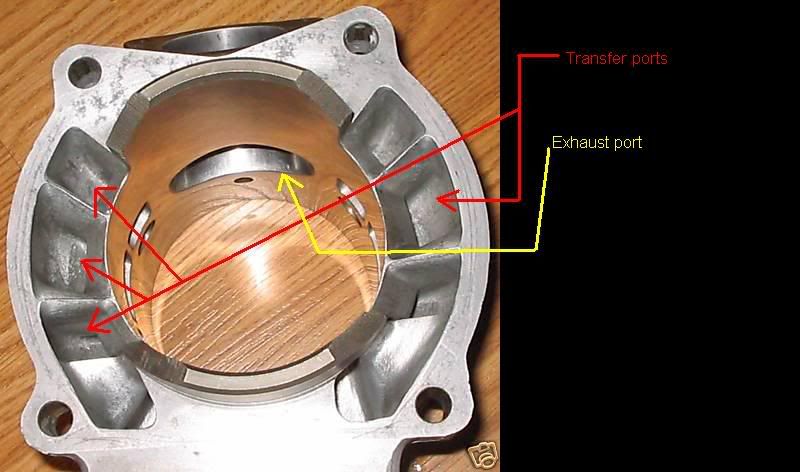
This flow is controlled by “ports,” small windows or tunnels in the cylinder wall that are covered and uncovered by the piston as it moves.
-
Intake Port: Where the air and fuel mixture enters the crankcase.
-
Transfer Ports: Where the mixture is “transferred” from the crankcase up to the combustion chamber.
-
Exhaust Port: Where the burned gases are expelled after combustion.
A stock saw’s ports are “good enough.” They are cast at the factory and are often designed to be restrictive to meet noise and emissions standards.
Porting is the art and science of modifying these ports to improve “volumetric efficiency,” a fancy term for the engine’s ability to breathe. The goal is to get more air and fuel in and get all the exhaust gases out faster. This results in a more powerful and violent combustion stroke, which translates directly to more horsepower and higher chain speed.
The Chainsaw Porting Process Explained
A professional porting job is far more complex than just making the holes bigger. It’s a precise operation that requires a deep understanding of 2-stroke engine theory. Here is the chainsaw porting process explained in basic steps:
-
Complete Teardown: The saw’s engine (“powerhead”) is completely disassembled, and the cylinder is removed.
-
Inspection and Planning: The porter (the person doing the work) inspects the cylinder. They will measure the stock timing numbers. These numbers, measured in degrees of crankshaft rotation, dictate when each port opens and closes relative to the piston’s position. The porter then decides on new timing numbers to achieve the desired performance (e.g., high-end RPM or low-end torque).
-
Grinding the Ports: This is the core of the porting job. Using a high-speed grinder with a specialized carbide bit, the porter carefully reshapes the ports.
-
Exhaust Port: This usually sees the most work. It is often widened and raised to allow exhaust to escape faster, which also changes the timing.
-
Transfer Ports: These are meticulously reshaped and angled to improve the flow and “scavenging” of the air-fuel mix, ensuring the cylinder is fully cleared of exhaust and fully charged with a fresh mix.
-
Intake Port: This may be modified to improve airflow from the carburetor.
-
-
The “Muffler Mod”: A ported saw is useless if it can’t exhale. A muffler mod is a critical part of the process. The stock exhaust outlet is tiny to keep the saw quiet. The porter will drill new holes or significantly enlarge the existing outlet to allow the high volume of exhaust gases to escape without restriction.
-
Reassembly and Tuning: The engine is meticulously cleaned to remove all metal shavings and reassembled. After this, it must be re-tuned. Because the engine now “breathes” so much better, it requires more fuel. Running a ported saw on a stock tune will cause it to run “lean” (too much air, not enough fuel), which creates extreme heat and will quickly destroy the engine. This tuning process can be complex on modern saws with auto-tune carburetors, but experienced porters know how to work with them.

Credit: www.youtube.com
Stock vs. Ported Chainsaw: A Head-to-Head Comparison
The difference between stock vs ported chainsaw performance is not subtle. It’s a night-and-day change.
-
Power: This is the most significant difference. While hard to get exact numbers, a professional porting job can increase a saw’s horsepower by 25-40%, or even more. This addresses the ” ported vs stock chainsaw power” question directly: the ported saw is vastly more powerful.
-
Speed: The engine will rev higher and faster, creating high-revving RPM saws that sing at a much higher pitch. This translates to faster chain speed, meaning the “cutters” on the chain are moving across the wood more times per second.
-
Cutting Performance: The combination of more power (torque) and more speed means the saw cuts dramatically faster. Where a stock saw might “bog down” and slow in the middle of a large-diameter cut, a ported saw will pull through it with authority.
-
Throttle Response: A ported saw often feels “snappier,” responding instantly to the throttle.
The Great Debate: Ported Chainsaw vs. Muffler Mod
This is a common question for those dipping their toes into saw modification. What is the difference between a ported chainsaw vs muffler mod?
A muffler mod by itself is a popular and cheap first step. Simply opening up the exhaust outlet lets the saw exhale better and provides a noticeable (but small) performance boost, perhaps 10-15%.
However, a muffler mod alone doesn’t change the engine’s fundamental breathing characteristics. A full porting job changes the engine’s intake, transfer, and exhaust timing, and includes a muffler mod. It’s the difference between letting a runner breathe through their mouth instead of their nose (muffler mod) versus giving them a larger set of lungs and a larger mouth (full porting).
Is Porting a Chainsaw Worth It? The Pros and Cons
This brings us to the most important question: Is porting a chainsaw worth it? It entirely depends on you. Let’s break down the ported vs stock chainsaw pros and cons.
Chainsaw Porting Benefits (The Pros)
-
Massive Power & Speed Increase: This is the primary reason. For a professional logger or arborist, time is money. Cutting trees or bucking logs 30% faster results in significant productivity gains.
-
Less Effort: Because the saw is so much more powerful, you don’t need to “lean on” the saw or force it. You simply guide it, and the saw does the work. This reduces operator fatigue over a long day.
-
Higher Efficiency (for Pros): A pro can get more work done in less time, making the investment in the porting job pay for itself.
The Downsides (The Cons)
-
Cost: A professional porting job is not cheap. It involves hours of highly skilled labor and can cost hundreds of dollars, sometimes approaching half the price of a new saw.
-
Instantly Voids Warranty: The moment you modify the engine, your manufacturer’s warranty is gone. If the engine fails for any reason, you’re paying for the repairs yourself.
-
Increased Noise: A ported saw with a modified muffler is extremely loud. It’s not just a little louder; it’s a high-pitched, aggressive sound. Double-hearing protection (plugs and muffs) is often necessary.
-
Higher Maintenance & Tuning: A high-performance engine is less forgiving. You must use high-quality, high-octane fuel and a premium 2-stroke oil mix (often at a richer ratio, like 32:1 instead of 50:1). It needs to be kept in perfect tune to prevent engine-destroying lean-burn conditions.
How to Get a Ported Chainsaw
You can’t buy a ported chainsaw from a dealer. It’s an aftermarket service.
-
Find a Professional Builder: The best way is to find a reputable saw porter. This often means searching online forums dedicated to chainsaws and “performance saws.” You may need to create an account and log in to see the sections for builders. When you visit a builder’s website, a new window might open showing their list of services.
-
Choosing Your Saw: When you’re browsing their service menus, you might use your arrow keys to scroll down the options or hit the space key to page down. Choosing a selection from their service list will show pricing and turnaround times. The best chainsaws to port are typically high-displacement professional models (e.g., Stihl MS 462, MS 661, or Husqvarna 572XP, 395XP), as they have the most “meat” to work with and offer the biggest gains.
-
Buy Pre-Ported: Some builders buy new saws, port them, and then sell them as a complete, ready-to-run package.
Frequently Asked Questions
What Is A Ported Chainsaw?
A ported chainsaw has modified engine ports for better performance. It cuts faster.
Why Port A Chainsaw?
Porting increases power and efficiency. It makes cutting easier and quicker.
How Does Porting Affect A Chainsaw?
Porting improves airflow and fuel mix. This boosts power and speed.
Is Porting A Chainsaw Safe?
Yes, if done correctly. Always follow safety guidelines.
Conclusion
A ported chainsaw is a specialized piece of high-performance equipment. It takes a standard, reliable work tool and turns it into a “hot rod” optimized for one thing: maximum cutting power.
The chainsaw porting benefits, unmatched speed, and power are undeniable. For the professional who makes their living with a saw, it can be a game-changing investment that reduces fatigue and increases productivity.
However, for the average homeowner who cuts firewood a few times a year, it’s likely overkill. The cons, high cost, voided warranty, extreme noise, and higher maintenance needs, make a stock pro-level saw a much more practical choice.
If you do decide to enter the world of ported saws, respect the power. Always wear full safety gear (chaps, helmet, eye, and ear protection) and understand that you are handling a tool that demands your full attention.
Table of Contents