

Changing a Craftsman circular saw blade is simple and safe when you follow the right steps and safety checks. In this guide, you will learn exactly how to remove an old, dull blade and install a fresh one correctly. We will cover the tools you need, the step-by-step process, and how to choose the right replacement blade for cutting wood, MDF, or metal. Let’s get your saw back to making clean, smooth cuts.
Before You Start: Safety and Tools You Need
Safety always comes first when working with power tools. Changing a blade puts your hands close to sharp teeth and the saw’s motor mechanism. Therefore, taking a few simple precautions will prevent accidents. Before you do anything else, if you have a corded Craftsman saw, unplug it from the power outlet. If you have a cordless model, remove the battery pack completely. This guarantees the saw cannot accidentally start while you are working.
You do not need many tools to change a circular saw blade, but having the right ones makes the job easier and safer. Here is a quick checklist:
- The correct arbor wrench (this usually comes with your Craftsman saw).
- A pair of sturdy, cut-resistant work gloves to protect your hands from sharp teeth.
- Safety glasses should be worn during the whole process, especially if there is residual sawdust.
- A scrap piece of wood to help block the blade from turning.
- Your new replacement blade.
Simple PPE and Setup Checklist
| Item | Why it matters | Quick tip |
| Safety Glasses | Protects eyes from dust and any debris that might fall during the change. | Wear them even when the saw is unplugged. |
| Work Gloves | Prevents cuts from sharp blade teeth while loosening or tightening the bolt. | Choose gloves that offer good grip and cut resistance. |
| Stable Work Surface | Keeps the saw steady so you can apply force to the bolt safely. | Use a workbench or the floor; do not balance the saw on your lap. |
| Good Lighting | Helps you clearly see the bolt threads, blade direction arrows, and guard mechanism. | A portable work light can be very helpful. |
| Unplug/Remove Battery | The single most important step to prevent accidental starting. | Double-check that the power source is disconnected before touching the blade. |
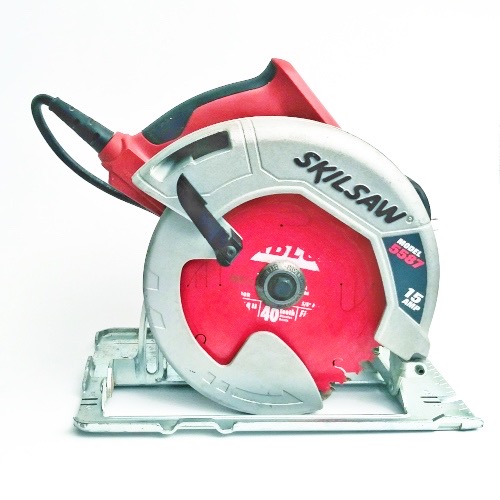
Credit: thecraftsmanblog.com
Understanding Your Craftsman Circular Saw
Familiarizing yourself with your saw’s parts makes the process smoother. The blade mounts onto a shaft called the arbor. A bolt and an outer washer hold the blade securely in place against the inner washer. Most Craftsman circular saws have a blade lock button, sometimes called a spindle lock, located on the motor housing. Pressing this button stops the arbor from spinning, which allows you to loosen or tighten the blade bolt.
Newer cordless Craftsman saws operate similarly to older corded models, but the battery removal step is crucial. Also, be aware that Craftsman has produced both blade-right and blade-left saws over the years. If you have a blade-left model, you might find our guide to left blade circular saws helpful for understanding its specific layout and benefits.
Step-by-Step: How to Remove the Old Blade
Follow these steps carefully to take off the old blade:
- Disconnect power: As mentioned, unplug the cord or remove the battery.
- Adjust the saw: Lower the base plate to its shallowest depth setting. This exposes more of the blade, making it easier to access the bolt.
- Engage the blade lock: Press and hold the blade lock button on the saw’s housing. You may need to rotate the blade slightly by hand (wear gloves!) until you feel the lock engage and stop the blade from spinning.
- Loosen the arbor bolt: While holding the blade lock button down, use the arbor wrench to loosen the bolt. Crucial Note: Check your Craftsman owner’s manual. Many circular saw bolts are reverse-threaded, meaning you turn them clockwise to loosen and counterclockwise to tighten. If the bolt feels incredibly tight, double-check the direction.
- Remove bolt and outer washer: Once the bolt is loose, unscrew it completely with your fingers. Remove the bolt and the outer blade washer and set them aside where they won’t roll away.
- Retract the lower guard: Manually lift the lower blade guard using its lever.
- Remove the blade: Carefully slide the old blade off the arbor shaft and out from under the saw.
- Tip: If you do not have a blade lock button, or it is not holding, you can carefully wedge a piece of scrap wood into the blade teeth against the saw’s base plate to keep it from turning while you loosen the bolt.
Installing the New Blade the Right Way
Now it is time to put on the fresh blade. The most important part is making sure the teeth face the right direction.
Check the guard: Release the lower guard lever. It should snap back freely to cover the new blade. If it sticks, clean out any sawdust around the pivot point.
Check blade direction: Look for an arrow on the new blade and an arrow on the saw’s upper blade guard. The teeth at the bottom of the blade should point forward, in the direction the saw cuts.
Place the new blade: With the lower guard retracted, slide the new blade onto the arbor shaft. Make sure it sits flat against the inner washer.
Reinstall washer and bolt: Replace the outer blade washer on the arbor, noting that it usually has flat sides that must align with the shaft. Then, thread the arbor bolt back in by hand. Remember the thread direction—it might be counter-clockwise to tighten.
Tighten the bolt: Press and hold the blade lock button again. Use the arbor wrench to tighten the bolt snugly. Do not over-tighten it; just get it nice and secure. The saw’s rotation during use also helps keep it tight.
Beginner’s Guide: Unboxing and Using a Circular Saw
Choosing the Right Replacement Blade for Your Craftsman Saw
Using the correct blade makes a huge difference in cut quality and safety. First, ensure you get the right size blade for your specific Craftsman model. Most standard circular saws use a 7-1/4 inch blade with a 5/8 inch arbor hole, but always check your saw’s manual or the markings on the old blade to be sure.
Next, choose a blade designed for the material you plan to cut.
| Material | Recommended Tooth Count | Best Blade Type |
| Framing Lumber | 24 T (Teeth) | General Purpose or Framing / Ripping |
| Plywood / OSB | 40 T – 60 T | Finish or Fine Finish |
| MDF / Trim | 60 T – 80 T | Ultra-Fine Finish |
| Corrugated Metal | Specialized Tooth Count | Metal-Cutting Circular Saw Blade |
For cutting materials like MDF, a specialized blade with a high tooth count is essential to avoid chipping. You can learn more in our guide to the best circular saw blade for MDF. Similarly, cutting corrugated metal requires a blade designed specifically for that task to prevent binding and ensure a clean edge.
When to Change vs When to Sharpen Your Blade
You know it is time to change your blade when cutting becomes difficult. Signs include burning marks on the wood, rough or splintered cuts, the saw motor bogging down, or increased vibration and noise.
However, you do not always have to throw away a dull blade. Many high-quality carbide-tipped blades can be sharpened multiple times. If you are interested in maintaining your blades, check out our guide on types of circular saw blade sharpeners. Before you attempt sharpening, it is vital to understand the safety precautions involved. Our circular saw blade sharpener safety guide covers important topics like managing sparks and dust.
Common Mistakes People Make When Changing Craftsman Blades
Even experienced DIYers can make mistakes. Here are a few to avoid:
- Not disconnecting power: This is the most dangerous mistake. Always unplug the cord or remove the battery.
- Installing the blade backward: Double-check the rotation arrows on the blade and the saw. Teeth at the bottom must point forward.
- Turning the bolt the wrong way: Remember that many arbor bolts are reverse-threaded. Forcing it the wrong way can strip the threads.
- Overtightening the bolt: You want it snug, but cranking it down with all your strength can make it incredibly difficult to remove later and might damage the washer or arbor.
- Touching sharp teeth without gloves: Even a dull blade can have sharp edges or burrs that can slice your skin.
Quick Safety Check Before You Start Cutting
Once the new blade is installed, perform this quick check before cutting any material:
- Double-check tightness: Ensure the arbor bolt is securely tightened.
- Spin by hand: With the power still disconnected, retract the lower guard and carefully spin the blade by hand (wear gloves). It should turn freely without wobbling or rubbing against any part of the guard or base plate.
- Check the guard again: Make sure the lower blade guard moves freely and snaps back to cover the blade when released.
- Reconnect power and test: Plug the saw in or replace the battery. Make a test cut on a piece of scrap material to ensure the saw runs smoothly and cuts cleanly before starting your project.
FAQs About Changing the Blade on Craftsman Circular Saw
How often should I change the blade on my Craftsman circular saw?
Change the blade whenever it becomes dull. Signs of a dull blade include burning on the wood, chipping, slow cutting, or the motor straining. For heavy use, this could be frequently; for occasional DIY use, a blade might last a long time.
Which way should the blade teeth face on a Craftsman circular saw?
The teeth at the bottom of the blade should point forward, in the direction you push the saw. Look for rotation arrows on the blade itself and on the saw’s upper guard to confirm.
Can I use any 7-1/4 inch blade on my Craftsman saw?
If your saw is designed for a 7-1/4 inch blade with a standard 5/8 inch arbor, then yes, you can use most blades of that size. However, always choose a blade appropriate for the material you are cutting, whether it’s framing lumber, plywood, or specialty materials like those covered in our MDF blade guide or corrugated metal blade guide.
Do I need a special wrench to loosen the blade bolt?
Your Craftsman saw likely came with the correct wrench, usually stored on the saw’s base or handle. If you lost it, you can often use a standard hex key or socket wrench, but ensure it fits the bolt head perfectly to avoid stripping it.
Is it safe for beginners to change a circular saw blade themselves?
Yes, absolutely. As long as you disconnect the power source first, wear gloves, and follow the steps carefully, changing the blade is a safe and routine maintenance task for any DIYer.
Conclusion: Make Blade Changes Part of Your Regular Saw Routine
Do not be intimidated by changing your Craftsman circular saw blade. Treating it as a normal part of your tool maintenance routine is key. A sharp, correctly installed blade designed for the material you are cutting makes your work safer, your cuts smoother, and extends the life of your saw’s motor. By following these simple steps and safety checks, you can confidently swap blades and keep your projects moving forward. Be sure to explore our other guides on Saw Theory to learn more about getting the best performance from your saws and blades.
Table of Contents